

For years I spent hours every month on budgeting, entering receipts and reconciling spreadsheets. Today the THRIVE LINKED app does it for me. Transactions arrive from the bank on their own, and instalments, assets and loans are visible in one place. One figure tells me whether all my obligations are covered this month. This is the story of how I got there.
How everything changes when we start earning our own money
I find it hard to write anything unless I start from the very beginning. When and why do we change the way we see money? When we live with our parents, money just comes from somewhere… Some get a fixed monthly allowance, others, like me, get money when they need it, for going out, for a friend’s present and so on. Back then we don’t yet feel that managing money matters, because we get it as we need it and in small amounts, so real savings aren’t that big either. But we are all different. Some spend money straight away, some carefully work out what to do with it, and some forget about it and never feel the need to use it. Yes, those people exist too!
Then we reach the age when we get a job. Apart from young entrepreneurs and free spirits who juggle their finances through the year, most of us take jobs where the salary comes once a month. At that moment most of us realise that what we get has to cover our needs for that month. If you live with your parents, you still have that old safety net, but if you’ve decided to move out and rent a flat, that’s where the story changes. Every month there’s rent and bills. Food and toiletries you buy because your parents no longer get them for you. Yes, reality hits us!
And that’s not a problem, we all look forward to it, we feel grown up and we’re happy to be responsible for ourselves. But now we also have money for other things, things we always wanted and could never afford. And there are many of those things, too many! Our appetites grow every month, everyone’s needs are different, but we all want nice furniture, clothes, nights out with friends, travel and so on. But when you put your salary and your monthly costs on paper, plus your wishes big and small, they usually don’t add up.
Now, the banks figured they could “help” us get around that problem. Everywhere around us pop up offers for cheap consumer loans, interest-free instalments, green, colourful and platinum cards with 100 perks. Let’s be clear, I’m not saying that’s bad, but it would be good to be aware that whichever of those perks we take, it’s pretty important to understand it. We’re not all the same and everyone will adapt those perks to themselves, and budgeting is still not something we learn at school. And the other part that’s tricky is psychology. We’re all human and we all have a different level of self-control. So how do you do something good with your money? Well, that’s exactly what I was secretly asking myself back then.
First there is always a spreadsheet
For me the spreadsheet started when I moved into my first flat, rented of course, and I still had a scholarship I had to live on. Oh yes, that spreadsheet held the basic monthly costs, nothing fancy. But it helped me understand whether my boyfriend and I could even afford to live on our own. It worked. We survived!
University came to an end, and passing the last exam took the noose off our necks, because it meant we could finally get jobs! First salary, new flat, we felt like we had finished the game. We decided to buy a motorbike. Buying in instalments became an option, and our standard of living was improving because we were using the perks the banks offered us.
It’s not that simple any more
Keeping track of costs was getting more complex, and I wanted to make managing my finances easier somehow. I found out there are actually apps for that! I couldn’t hide my excitement, I felt like I had discovered a big secret that would solve all my problems. Yes, it really made me happy, I can’t lie to you. First I installed Mint, but it didn’t have kuna, so working in dollars felt a bit silly. Besides, the way it worked didn’t really thrill me either, it seemed quite complicated, so I kept looking.
Searching around, I found an American app that, surprisingly, supported kuna, but unfortunately I couldn’t connect my bank account because they didn’t support our banks. But fine, at least I had all the other budgeting options. I watched all their videos on how to budget properly, set up all my groups in the budget and the tracking began. It was fun entering all the receipts into the app, loading the transactions and seeing where we stood every month. But every month it took up a lot of my time. I would pull a pile of collected receipts out of my wallet and type them into the app, reconcile the account balances and pester my boyfriend to tell me which transaction belonged to which group of costs, because after a while nobody remembers where a cost came from or what it was for. But I was persistent.
Soon we became parents and that monthly task got harder and harder to do, and the app itself got some new features that made the whole budgeting harder. One day I decided I had to make things easier for myself. I cancelled the subscription and decided to build a system that would be simpler for me. Of course, I kept the good practice I already had, but I decided to strip the data entry down and simplify it as much as possible. I used a Google Sheets spreadsheet so I would always have the link on my phone, and I entered every transaction into it as soon as it happened, or at least the same day. Card transactions stayed recorded in my Google Wallet notifications, which made it easier because I had the trail I needed for tracking.
That worked relatively well, but over time I wanted a better overview of my assets and to track loan repayments and my total net worth, the way I could in my old app. But again that needed manual monthly entry, which was tiring, and the bigger problem was that some months I forgot to do it. I did the manual entry, but I still had to sit down at the computer every month and check where things stood. Corrections, how much budget I have available next month. Have I set aside enough for the upcoming trips the kids have, have I entered this or that cost… And yes, there were mistakes.
I kept thinking I should take matters into my own hands and finally build an app that could make tracking and planning costs completely easy for me. But that wasn’t easy. When, how… I had the idea in my head, but building something like that was still a problem.
Can it really be done?
I decided to start. I checked everything that mattered for me to build something that really works the way I want, and when I confirmed that the biggest blockers could be solved, I got to work. Within a few weeks THRIVE LINKED went from an idea to a draft. I didn’t accept compromises on the method I knew would work. The idea is to bring manual input down to a minimum and push the benefit of using the app to the maximum.
When I solved the automatic import of transactions from the bank, that didn’t solve all my problems. The data had to be structured for me to get something meaningful. I thought about how to always see a single figure that tells me whether all my money needs are covered this month. I didn’t want to adjust that part by hand every time either. For that to be possible, I couldn’t overlook some money obligations that are usually a trap and that most people find very hard to track, because of course they are visible on bank statements, but they get lost in the crowd.
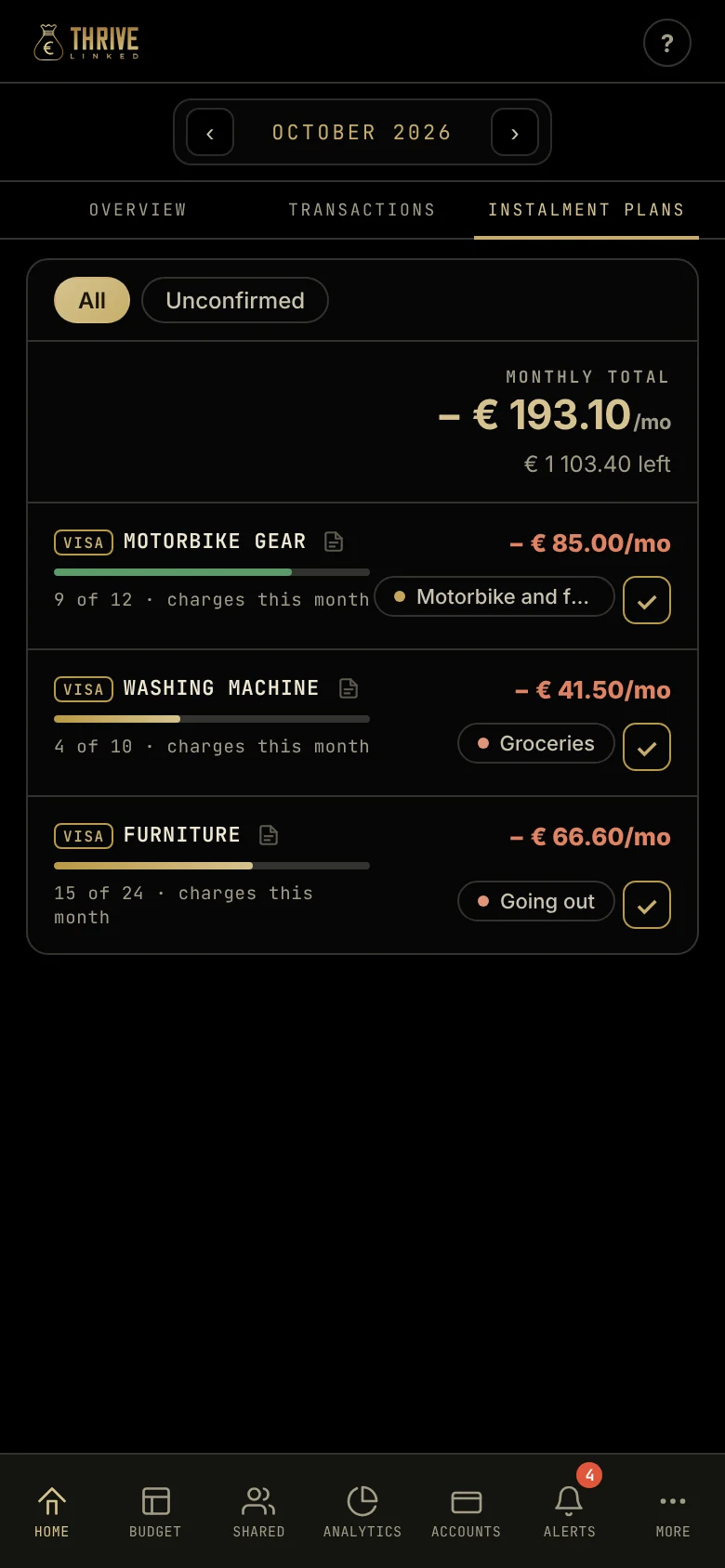
I’m talking about monthly instalments, the quiet eaters of the budget. It was important to me to have an overview of all instalments in one place, whether they come from a credit card or from a current account (an option some banks have). It’s important to know how much money you “lose” every month paying them off. Just as important is knowing when that amount will be freed up for new costs you are planning in the future.
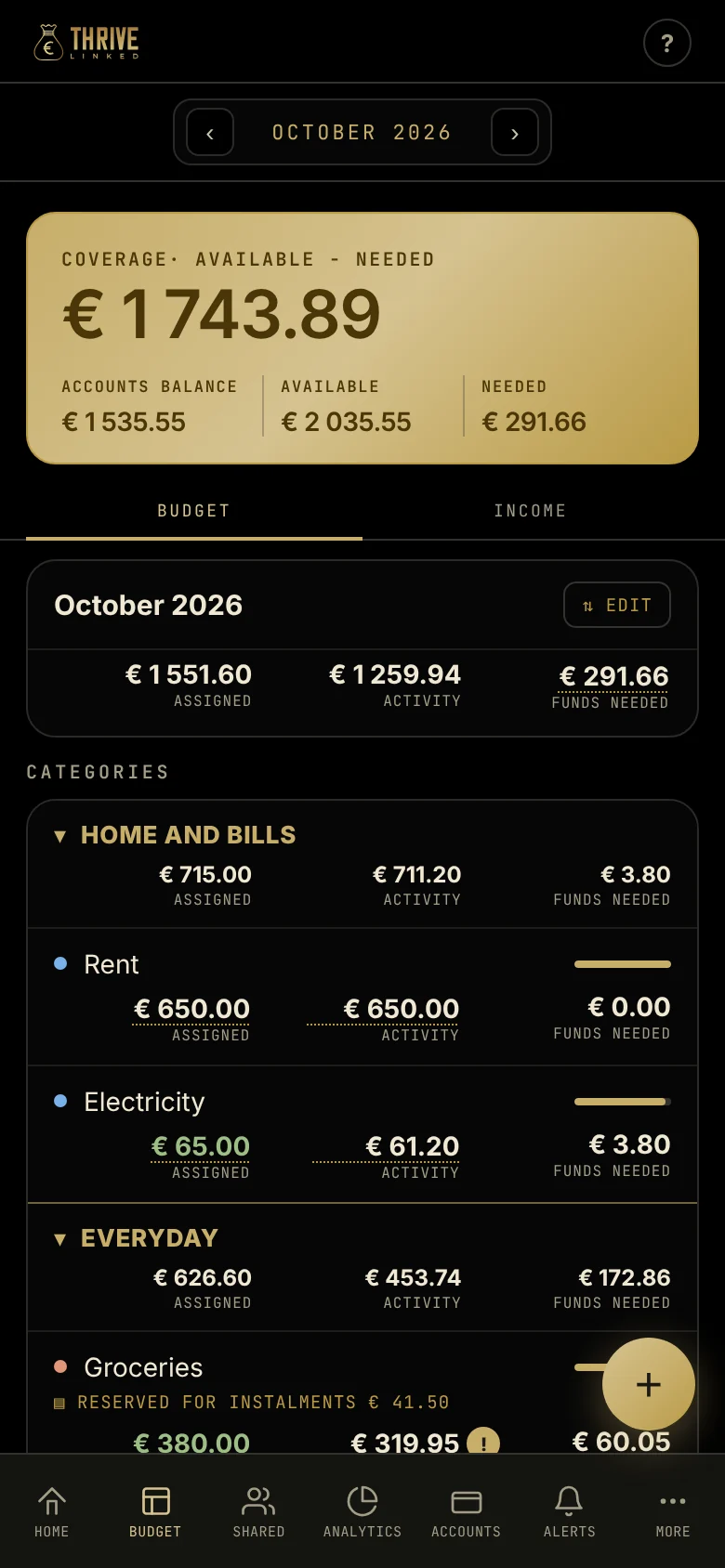
Assigning an amount to every category in the budget mattered to me too, a method that is nothing new in budgeting. Why does it matter? If you want to know how much money you can spend in a month, you need to know how much you usually spend on certain things. For most of us it’s easy to work out fixed monthly costs such as recurring utility bills, insurance and all sorts of subscriptions. The problem starts when you ask yourself: how much do I spend each month at the supermarket? How much do I spend on clothes, things for the kids, eating out, travel, concerts and so on? If you have never written those amounts down, believe me, you’ll struggle to pull an exact number out of your head. But that’s not a problem. When you start with this method, a rough figure is enough, and after 3 months of tracking you’ll have a pretty clear picture of where you stand. Then your planning gets much better, and with it the control you want over how you use your money.
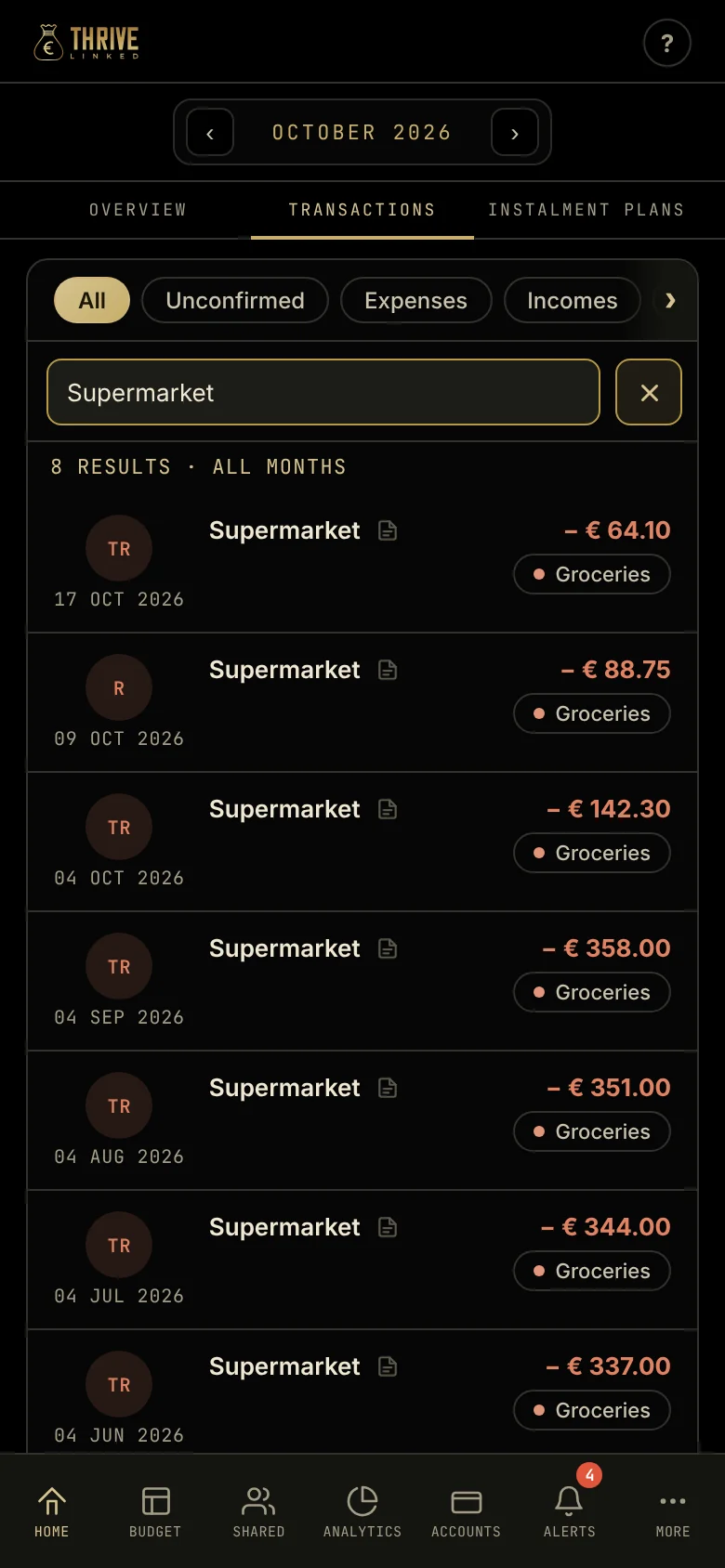
Having everything in one place and being able to search it! I can’t describe how much searching in banking apps annoys me. It is literally impossible to find the transaction that matters to me at that moment. It’s also a big benefit to see the transactions of all my accounts in one view. That way, whichever account I paid something from, I can find it by searching for text or by amount.
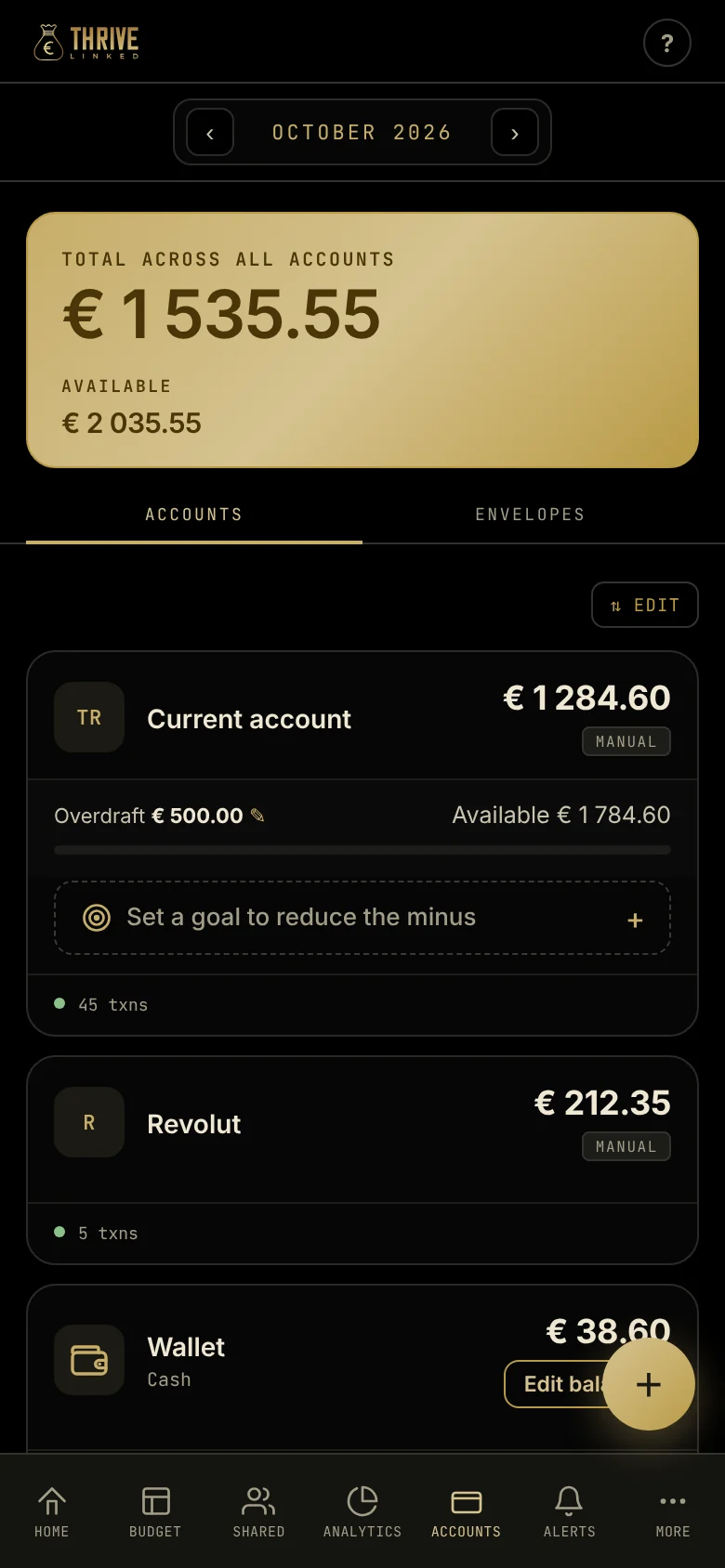
An overview of the balance of all accounts as one shared figure. It’s really awkward to keep going into separate banking apps to know how much money you have across all your accounts right now. OK, unless you’re a student with just one bank account. Most of us have several, including Revolut, which has become the standard because it makes transfers easy.
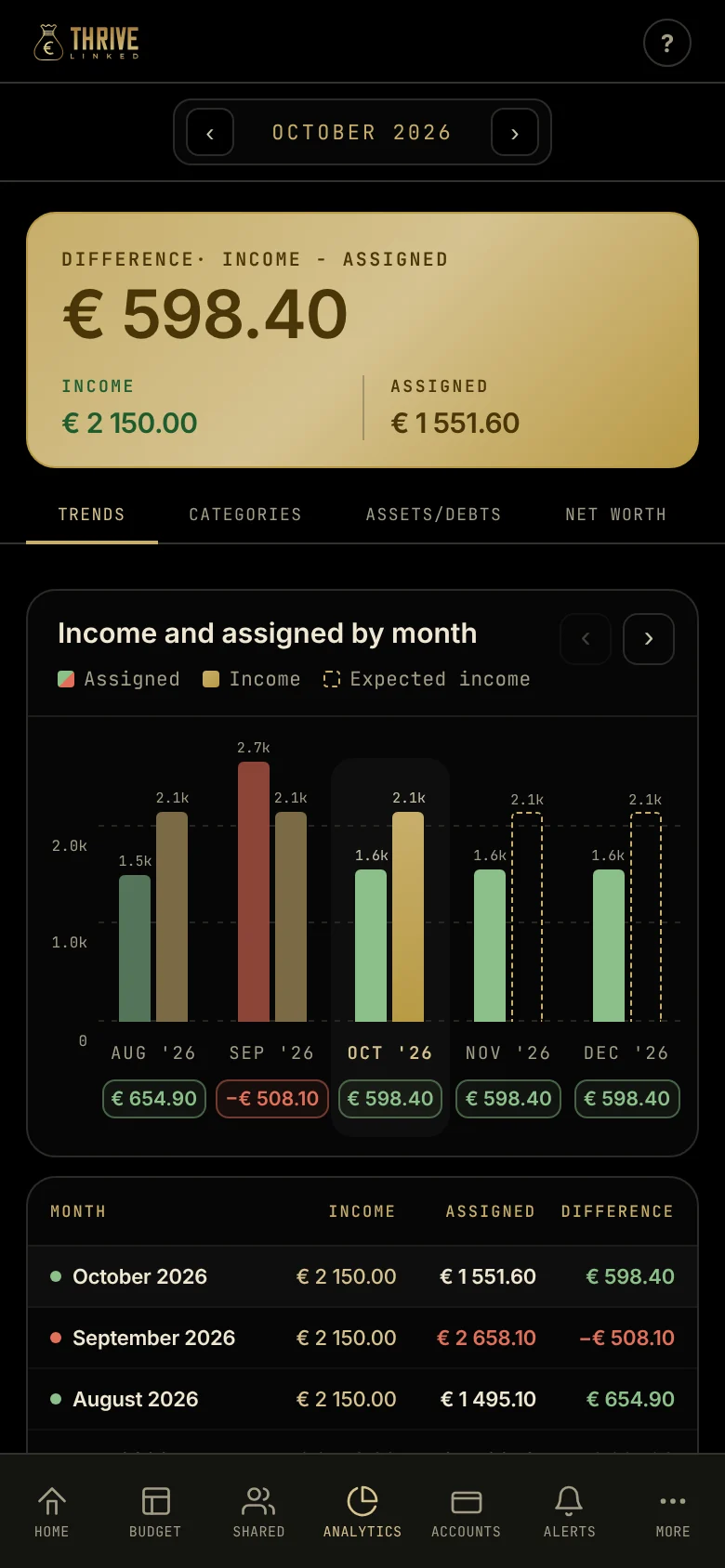
The ratio of income to planned spending over the next couple of months, not only what has already happened. I know the past and it doesn’t worry me, it’s behind me. What I want to know is how my costs will behave in the future. And that’s what I can see in THRIVE LINKED. I can plan my costs very successfully and not plan anything that isn’t realistic given my income.
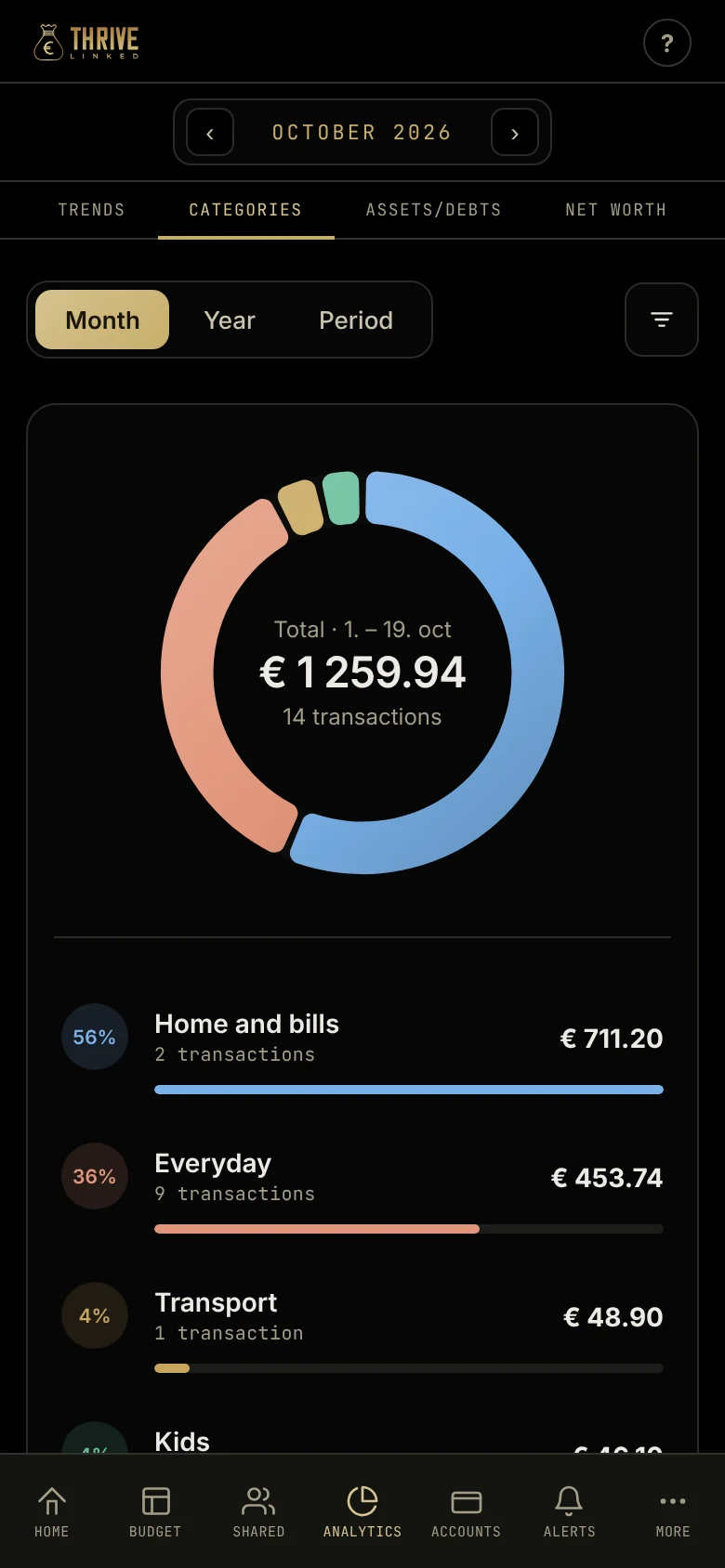
An overview of spending by category matters to me so I know whether I’m spending too much on the vehicle. Does it cost me more than something that may be more important to me in life? Those are decisions I make more easily when I can see them.
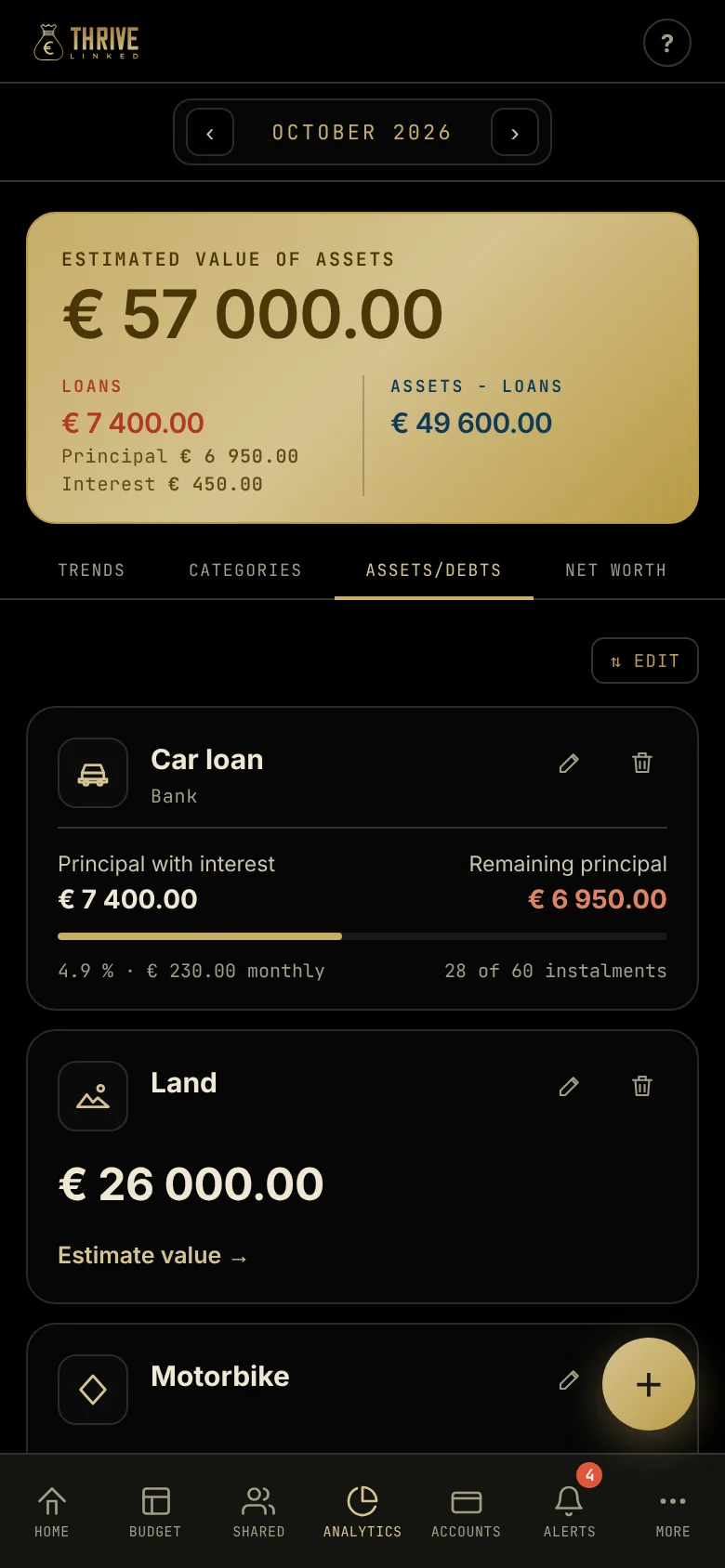
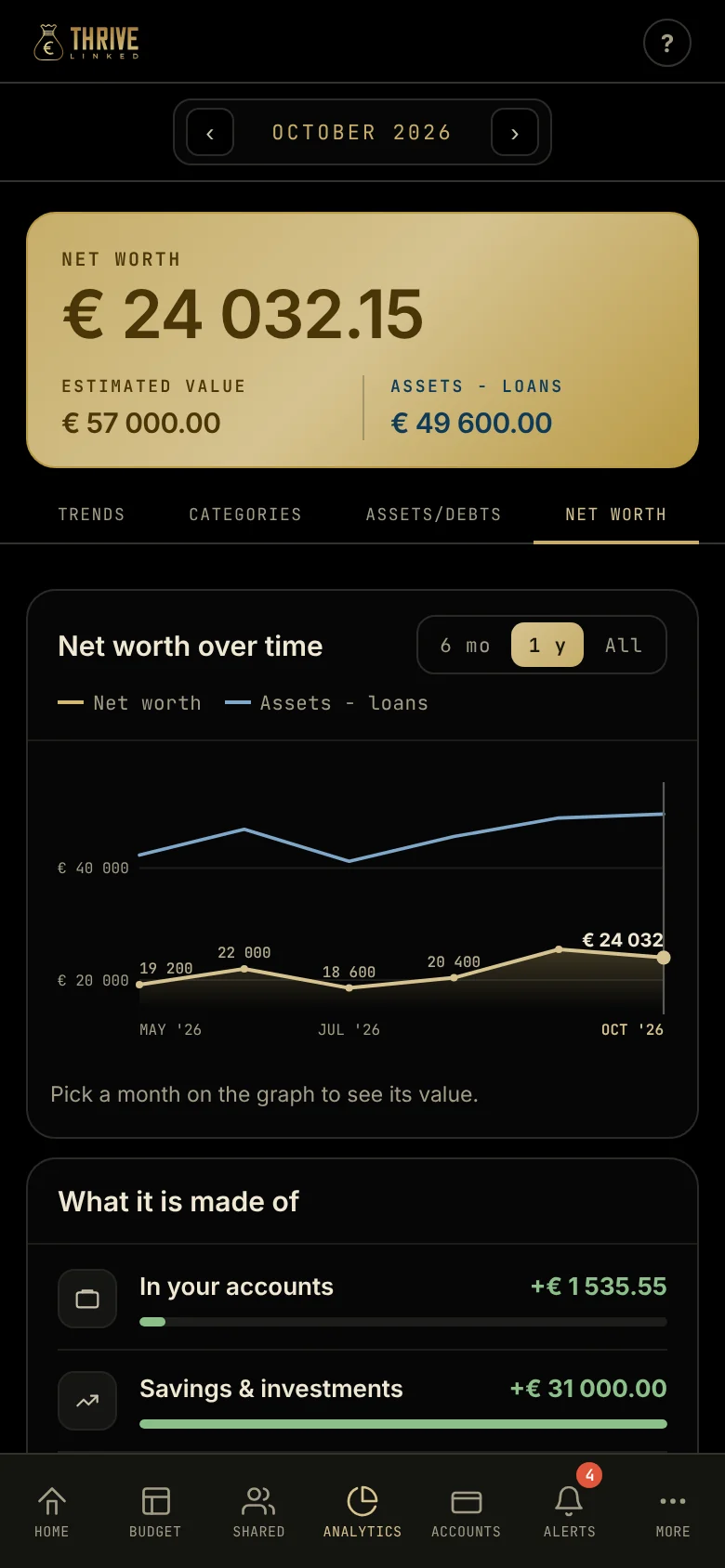
Having all my assets visible in one place with the loans against them, and seeing when those loans will be paid off. Knowing what those properties are worth today and what my net worth is. I want to know everything I own. It’s nice to see it gathered on one page and to see those numbers in one chart that sums up EVERYTHING!
All in all, I managed to build what I needed and now I enjoy how practical the app is every day. I no longer lose hours entering receipts, I scan them when I pay cash. Every transaction from my accounts flies in on its own and I just confirm it while I still remember making it. I don’t have to think about where I bought it or what that shop is called. I do it the same day and everything goes into the category where it belongs.
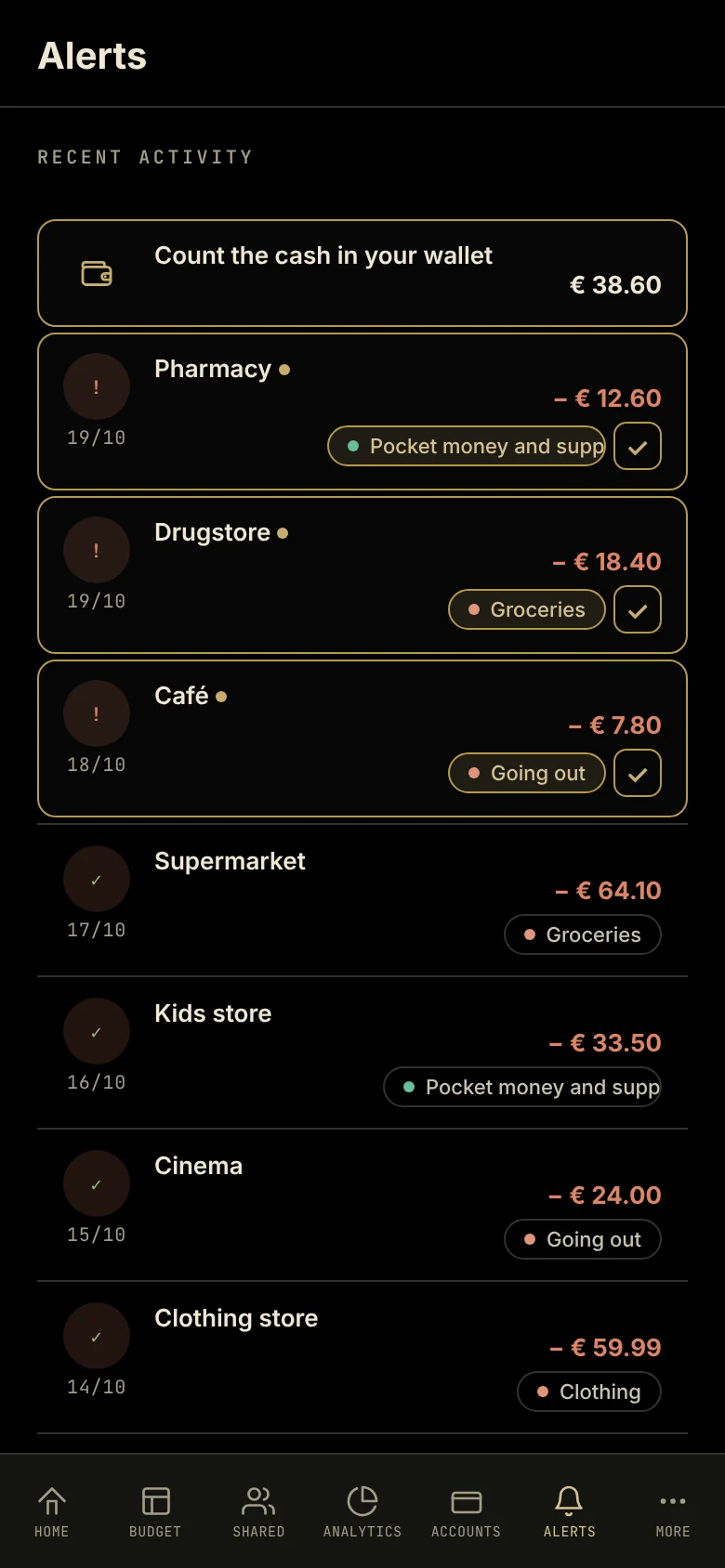
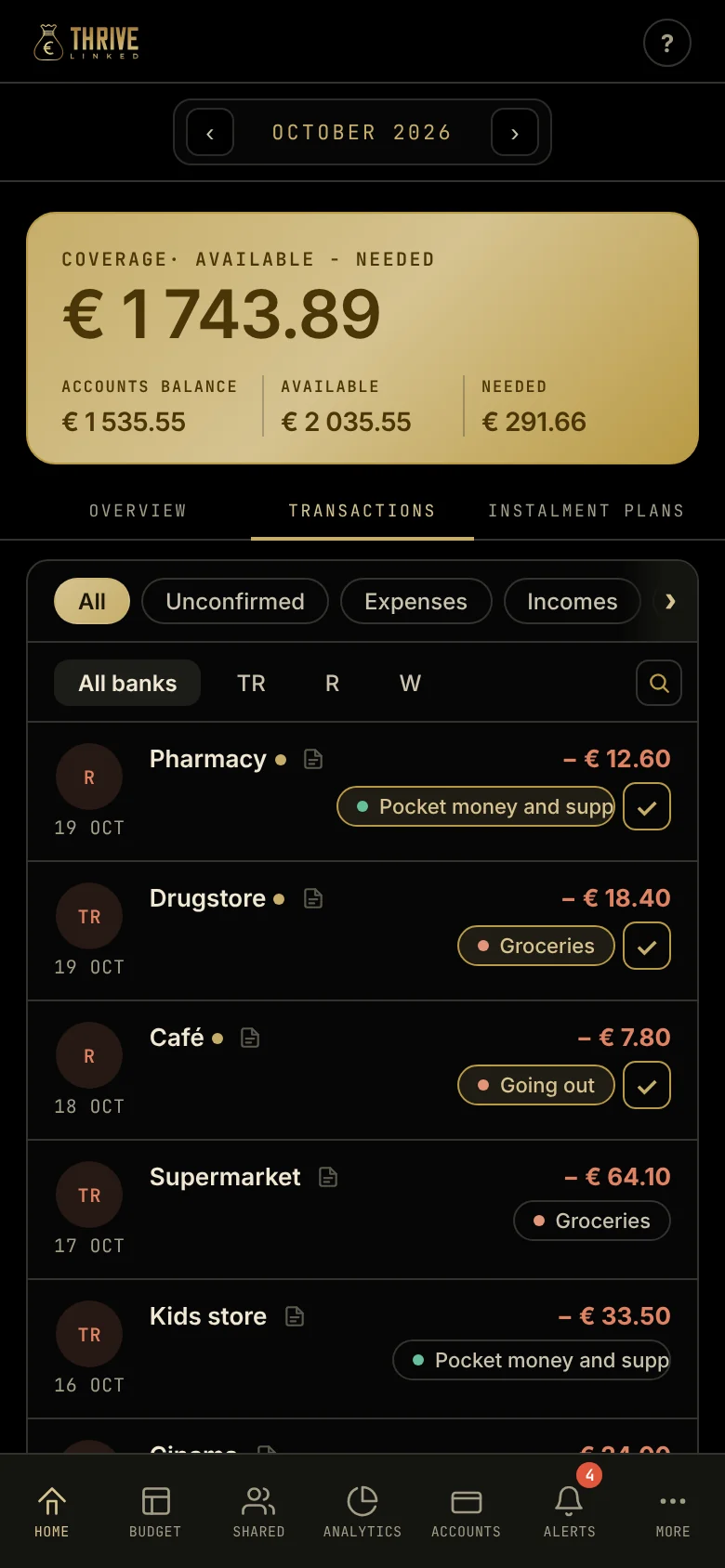
I have to admit it makes me really happy. At any moment I know whether I have enough money to treat myself to a piece of jewellery, a dress for a wedding I’m invited to, or a trip my best friend invites me on. I know whether I gave the kids their pocket money that month, even though they would be happier if I had forgotten and given it to them twice, but sadly for them that can’t happen any more. I feel secure, and I know I would notice compulsive shopping in my budget straight away and soon come to my senses.